Staff Aerospace Software Engineer. Hands-on technical leadership across national security, aerospace, and NASA software — distributed systems, architecture, platform engineering, and the path a change takes to production.
Staff Aerospace Software Engineer at Jacobs National Security. Mission software, platform engineering, and cross-program technical leadership, including cross-team SAFe Agile. Core program: roughly 12 Python repositories, four environments, and about 6 engineers.
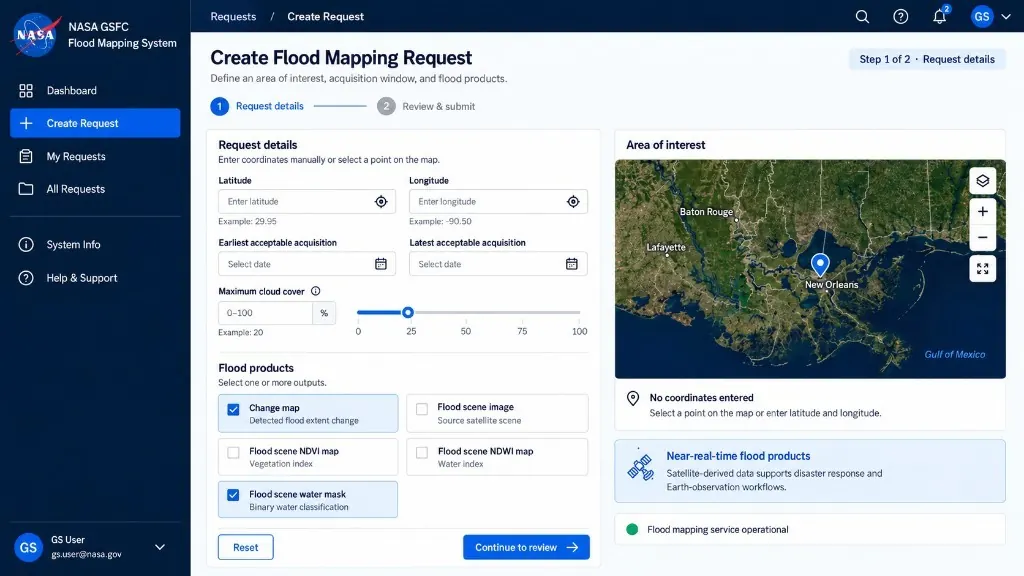
Mission software is the current work. The public proof is a NASA flood-mapping system and The Dry Standard, an application I design and operate, plus the tools I maintain in the open.
Built focused tools for local CI, prioritizing test gaps, and pipeline governance.
Inspect the source, tests, and usage documentation
Independently authored and maintained; public source is the evidence.
Technical scope
Where the work sits
Mission software and distributed systems
Python services, shared interfaces, and integration across repositories and environments. Messaging stays behind a common contract so broker choice is configuration.
Aerospace and national security engineering
Hands-on delivery in high-assurance settings: review, testing, and release practices that have to hold across teams. Program detail stays unpublished.
Software and platform architecture
Interface design, repository standards, and the engineering system around the application: CI, review, and the checks that travel with the change.
Cloud, containers, and Kubernetes
NASA delivery on AWS and Kubernetes, including GitLab CI for public satellite-data access, alongside mission-software environments.
DevSecOps, automation, and CI/CD
Pipelines, coverage, type checks, and security gates as the baseline for a change, not a separate process after the fact.
Technical leadership and delivery
Architecture decisions, engineering standards, review, and development of engineers who are shipping the same work. Personnel authority stays with management.
Engineering leadership
Technical leadership
Direction stays close to the code: architecture, standards, and the path a change takes to production.